
Generic Training Is For Generic Workplaces. Childcare Isn’t One Of Them.
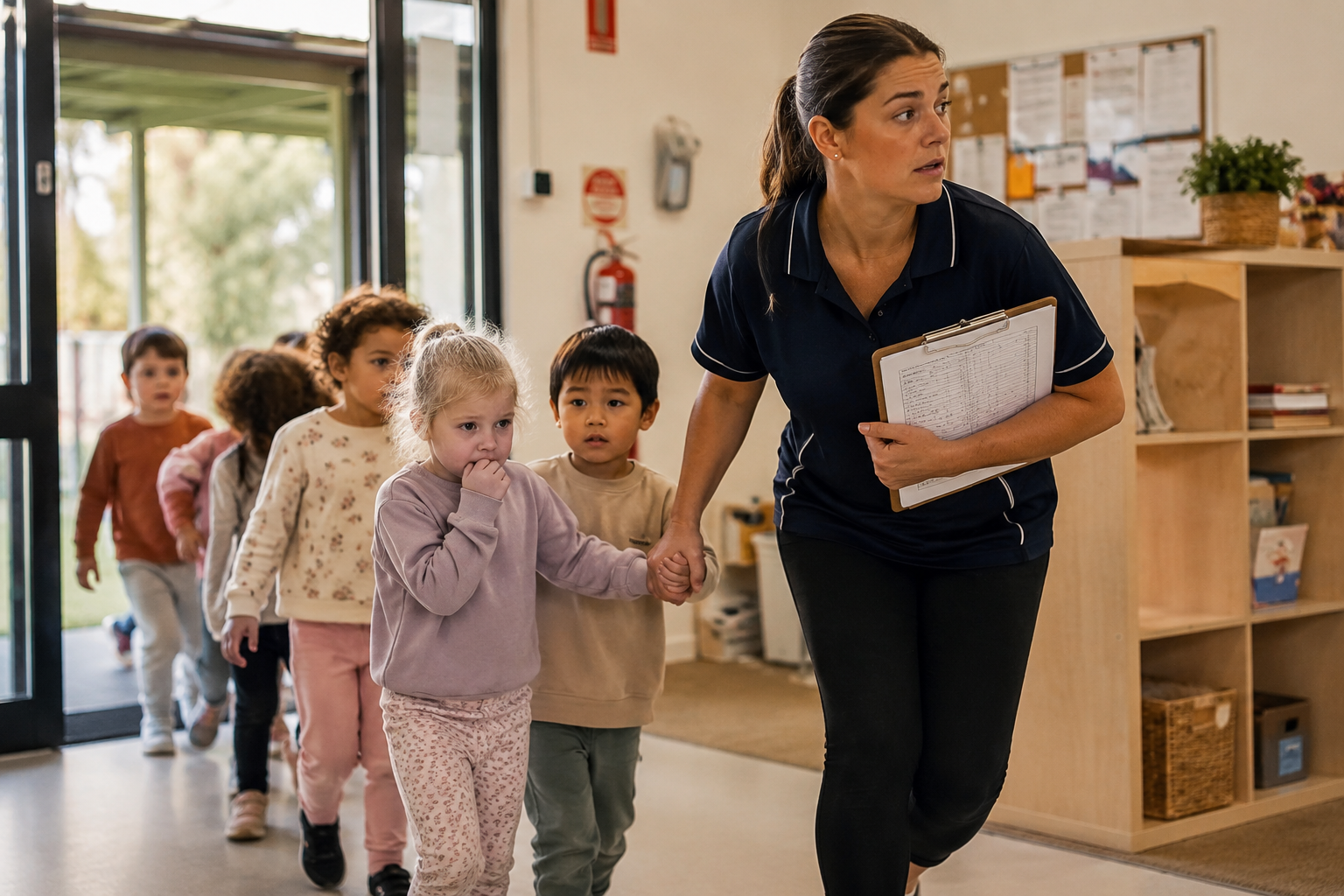 When most people think about emergency warden training, they think about fire.
Raise the alarm. Direct people to the nearest safe exit. Move to the assembly area. Account for everyone.
That works in a lot of workplaces.
Childcare is not one of them.
In an early learning environment, educators aren’t simply responsible for getting themselves out safely. They are responsible for babies, toddlers and young children who may not understand what is happening, may become frightened, may hide, may be asleep, may need physical assistance, or may not be able to follow instructions at all.
They depend on the adults around them to know what to do.
And that is exactly why generic warden training is not enough.
Fire is only one part of the picture
A fire is an obvious emergency, but it is far from the only situation childcare educators may need to respond to.
A child may be missing or unaccounted for.
An aggressive parent or visitor may enter the service.
A parent involved in a custody dispute may attempt to collect a child when they are not authorised to do so.
There may be a medical emergency, a lockdown, a security threat or another incident that requires children and educators to remain inside rather than evacuate.
Each of these situations requires a very different response.
Telling educators how to evacuate a building is important.
But it does not prepare them for the full range of emergencies they may actually face.
“Everyone out” is not an emergency plan
In a typical workplace, a warden can direct adults towards an exit and reasonably expect them to understand the instruction and act on it.
Now imagine giving the same instruction to a room full of two-year-olds.
Childcare evacuation requires educators to think about much more than simply identifying the nearest exit.
Who is responsible for each group of children?
How are babies or non-ambulant children moved?
What happens if a child refuses to move, becomes distressed or hides?
How are children accounted for during and after an evacuation?
What equipment, medication or attendance information needs to go with them?
What happens if the safest response is not evacuation at all?
These are not small details.
They are the emergency response.
Educators need training for the environment they actually work in
Emergency training should prepare people for realistic scenarios, not just tick a box.
For childcare services, that means educators need to understand how their emergency responsibilities apply when the people in their care cannot necessarily look after themselves.
It also means recognising that an emergency may involve behaviour, security, supervision and communication just as much as fire.
A missing child requires a coordinated response while maintaining supervision of every other child.
An aggressive person on site may require educators to secure areas, protect children and escalate the incident without increasing the risk.
A custody-related incident can become highly emotional and potentially dangerous very quickly.
These are situations where educators need confidence in the process before they happen.
An emergency is not the time to discover that your training never covered the scenario in front of you.
This is why we created separate childcare warden training
At Click Compliance, we have a dedicated childcare emergency warden course because we do not believe childcare educators should receive generic workplace training and be expected to fill in the gaps themselves.
The environment is different.
The risks are different.
The people relying on the wardens are different.
So the training should be different too.
Our childcare-specific training considers the realities of managing emergencies in early learning environments, including evacuation, lockdown, missing children, threatening or aggressive behaviour and the additional responsibilities that come with caring for young children during an emergency.
Because good emergency training is not about memorising a list of warden duties.
It is about knowing how to respond when something actually goes wrong.
Children aren’t expected to know the emergency plan. Your educators are.
Every workplace should have people who know what to do in an emergency.
In childcare, that responsibility carries even more weight.
The children in your care may not understand the alarm.
They may not know where the exit is.
They may not recognise danger.
They may not be able to get themselves to safety.
They depend on you.
And that is why childcare emergency training cannot simply be a generic warden course with a different workplace name added to the certificate.
Generic training is for generic workplaces. Childcare isn’t one of them.