
ChatGPT Wrote My Risk Assessment. What Could Go Wrong?
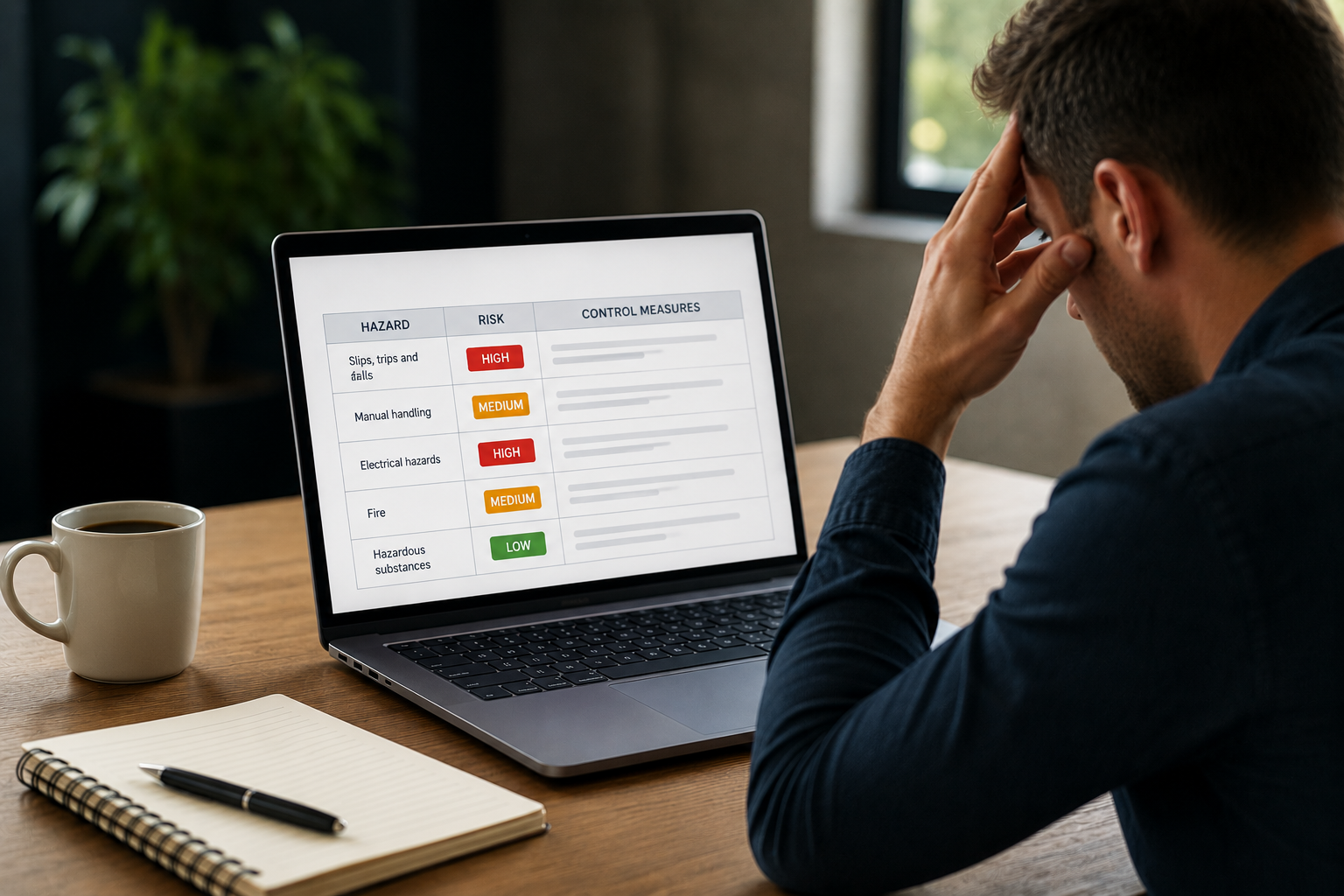 A business owner opens ChatGPT and types:
"Write me a workplace risk assessment."
Within seconds, they have a polished-looking document complete with hazards, controls, risk ratings and recommendations.
The formatting looks professional. The language sounds credible. The document appears comprehensive.
So what's the problem?
The business owner has no way of knowing whether it's actually correct.
Artificial Intelligence (AI) tools are rapidly changing how businesses create documents. From policies and procedures to training materials and risk assessments, AI can produce content in seconds that would previously have taken hours to develop.
For many businesses, that efficiency is incredibly appealing.
However, when it comes to compliance and workplace safety, relying on AI-generated content without proper review can introduce significant risks.
The Problem Isn't That AI Is Wrong
The biggest misconception about AI is that it operates like a compliance professional.
It doesn't.
AI doesn't inspect workplaces. It doesn't understand your business operations. It doesn't consult with workers, identify site-specific hazards, or stay accountable for the advice it provides.
Instead, AI generates responses based on patterns in information it has learned from.
That means it can produce content that sounds accurate, even when important details are missing or incorrect.
In compliance, those missing details matter.
Generic Documents Create Real Risks
One of the biggest dangers of using AI for compliance documentation is that the output is often generic.
A risk assessment generated by AI may identify common hazards associated with a task or industry, but it cannot assess the unique risks present in your workplace.
For example:
- A daycare centre may have child supervision requirements, the safe handling of food, medications, and allergens.
- A warehouse may have site-specific traffic management issues.
- A construction site may have unique environmental hazards.
- A manufacturing facility may use specialised equipment requiring additional controls.
- An office may have ergonomic or psychosocial risks not considered in a generic assessment.
If these hazards are not identified, they cannot be effectively managed.
A document that looks complete may leave critical gaps in your risk management process.
Compliance Is More Than Having a Document
Many organisations fall into the trap of believing compliance is simply about having paperwork.
It's not.
A risk assessment is only valuable if it accurately reflects the work being performed and the risks workers are exposed to.
The same applies to:
- Policies and procedures
- Emergency plans
- Safe Work Method Statements
- Inspection checklists
- Training & training materials
Regulators don't assess whether a document looks professional.
They assess whether risks were properly identified, controlled, communicated and reviewed.
A well-designed document that doesn't reflect reality may offer little protection when things go wrong.
AI Can Make Mistakes With Confidence
One challenge with AI-generated content is that it often presents information confidently, regardless of whether it is correct.
This can include:
- Incorrect legislative references
- Outdated standards
- Missing compliance obligations
- Inappropriate control measures
- Inaccurate interpretations of legal requirements
For someone without specialist compliance knowledge, these errors can be difficult to identify.
As a result, businesses may unknowingly implement documents containing inaccurate or incomplete information.
The Consequences Can Be Serious
When compliance documentation is incorrect, the consequences extend far beyond paperwork.
Potential outcomes include:
- Workplace injuries
- Regulatory breaches
- Improvement notices
- Fines and penalties
- Increased insurance risks
- Reputational damage
- Lost productivity
Following an incident, regulators and investigators are unlikely to accept "AI generated the document" as an explanation for why hazards were not properly identified or controlled.
The responsibility remains with the business.
Where AI Can Add Value
Despite the risks, AI is not something businesses should avoid altogether.
Used appropriately, it can be an effective tool.
AI can help:
- Generate first drafts
- Brainstorm potential hazards
- Improve document structure
- Simplify complex language
- Create training content
- Save administrative time
The key is understanding that AI should support the compliance process, not replace it.
Think of AI as an assistant rather than an expert.
Human Review Remains Essential
Every workplace is different.
Compliance requirements vary between industries, states, activities and operating environments.
Before implementing any AI-generated document, businesses should ensure it has been reviewed by someone with the appropriate knowledge and experience.
This review should confirm that:
- Hazards are relevant to the workplace
- Control measures are appropriate
- Legislative references are accurate
- Industry requirements have been considered
- The document reflects actual work practices
Technology can assist with efficiency.
Professional judgement is what ensures compliance.
Final Thoughts
AI is becoming an increasingly valuable business tool, and its role in document creation will continue to grow.
But when it comes to compliance, workplace safety and risk management, speed should never replace accuracy.
A risk assessment, policy or procedure is only effective if it reflects the real-world risks faced by workers and the controls required to manage them.
AI can help create a document.
It cannot verify your workplace.
It cannot inspect hazards.
And it cannot accept responsibility if something goes wrong.
The question isn't whether businesses should use AI for compliance.
The question is whether they are taking the time to verify, review and customise what AI produces before putting it into practice.
Because when workplace safety is involved, "ChatGPT wrote it" is unlikely to be an acceptable defense.